Want Your Quit-Smoking Meds and Nicotine Replacement to Actually Work? Timing Is Everything
The same treatment can fail for one person and work wonders for another, depending on when and how it’s used
A lot of people ask: which medication works best?
The better question is: which treatment fits me, right now?
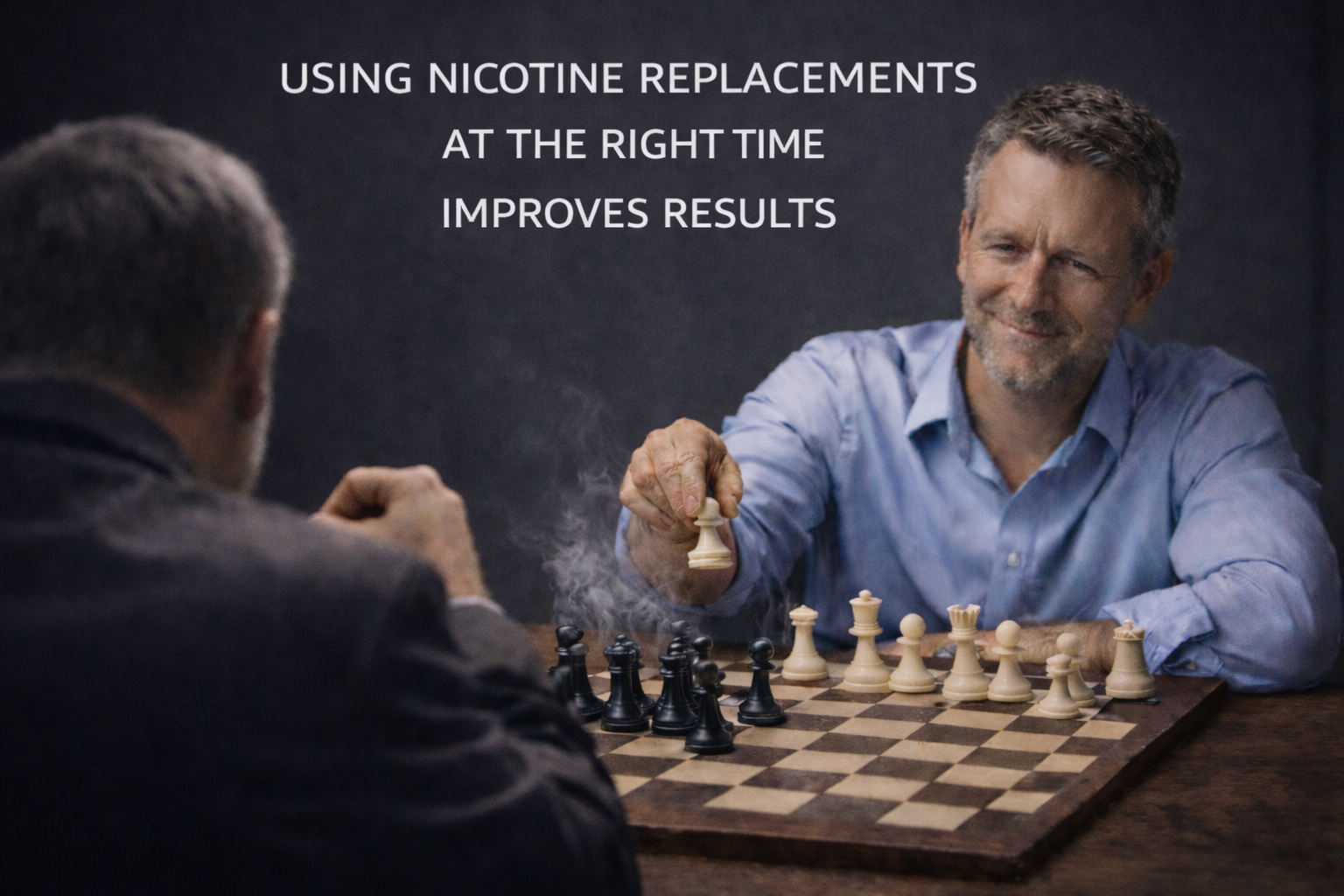
The goal isn’t finding the strongest medication.
The goal is finding the right treatment at the right time.
What’s the best treatment to quit smoking?
There’s no single best treatment that works for everyone. What actually helps is a treatment that matches how strong your nicotine dependence is, your Emotional Capital, your daily routine, your medical profile, and where you’re really at right now. A good treatment used at the wrong time can fall flat. The right treatment used with a real strategy can change everything.
When should you start using nicotine patches or other nicotine replacement?
Nicotine replacement therapy tends to work best when it isn’t just a last-ditch effort. Starting at the right time can help take the edge off withdrawal, protect your emotional energy, and free you up to actually work on your habits, your triggers, and your smoking rituals, instead of spending all day white-knuckling through cravings.
Do nicotine patches actually help you quit smoking?
Nicotine patches can help ease withdrawal symptoms by keeping your nicotine levels more stable throughout the day. But their value goes beyond the chemistry. They can also give you enough steadiness to work on your behavior, your triggers, your routines, and the psychological side of the habit.
1Nicotine Replacement as Relief for Your Mental Load
Nicotine replacement therapy usually gets explained as a way to get nicotine into your system without lighting up. That’s true, but it’s only part of the picture. In a realistic quit-smoking plan, it can also work as relief for the mental load you’re carrying.
Your prefrontal cortex, the part of your brain in charge of self-control, planning, and willpower, works kind of like a battery with limited charge. When that battery gets drained by withdrawal, anxiety, stress, work, family stuff, and emotional strain all at once, you end up fighting on too many fronts at the same time.
Used strategically, nicotine replacement can take some of that physical withdrawal pressure off your plate. That frees up your emotional energy for where it’s actually needed: breaking associations, changing routines, and protecting your decision to quit.
«The real power isn’t just the nicotine in the patch. It’s the exact moment that nicotine protects your prefrontal cortex, the control center behind every decision you make.»
2Using It Strategically Instead of Reactively
Using a nicotine patch in the middle of an emotional crisis isn’t the same as building it into your plan during a more stable stretch of life. In that second scenario, the exact same tool works a whole lot better. Your brain isn’t stuck juggling everyday stress, nicotine withdrawal, and emotional burnout all at once with nothing left in reserve. That difference is yours to use.
This is where Timing for Smoking Cessation and Emotional Capital come together. The question isn’t just which product you use. It’s whether you actually have the inner resources for that product to do its job.
Used strategically, nicotine replacement can create a calmer inner space, one where the cigarette takes up less room in your head. That makes it a lot more realistic to change your behavior, spot your triggers, and separate nicotine from the ritual of smoking.
How can nicotine replacement actually help me quit smoking?
Nicotine replacement can help ease your withdrawal symptoms while you work on the behavioral side of smoking. On its own, it won’t erase your habits. Its real strategic value is giving your brain enough stability to change the routines, triggers, and associations that have kept the cigarette alive in your day-to-day life.
3Breaking the Conditioned Reflex: Nicotine Without the Cigarette
Smoking isn’t only about getting nicotine into your body. It’s a quick nicotine hit tied to a gesture, a taste, a smell, a place, a moment, and an emotion you’ve felt over and over. Over time, all of that turns into a conditioned reflex. The trigger shows up, and the cigarette seems to offer itself up on its own.
Nicotine replacement delivers nicotine a different way. Depending on the form, that can happen slowly, steadily, or fast, but never by lighting a cigarette. That distinction matters. It teaches your brain something new: nicotine can show up without smoke, without the hand-to-mouth ritual, and without the usual scene around it.
That’s how the psychological habit gradually loses its grip, while the physical side stays more under control. That’s why treatment shouldn’t get reduced to just picking a product. It’s really a strategy for separating nicotine from the cigarette itself.
Nicotine replacement isn’t a magic fix.
It’s a biological stabilizer.
4Strategic Tools: A Stable Base Plus Fast Relief
The options below aren’t just products. They’re tools that each do a different job. A smart plan can use a longer-acting base to build stability, plus something fast-acting for the moments you’re most vulnerable. You’re not just along for the ride here. You’re learning when you need support, and why.
Nicotine Patch
Steady support all day long.
Keeps your nicotine levels more even and can help take the edge off withdrawal while you put your emotional energy toward changing behavior.
24-Hour vs. 16-Hour Patch
Different rhythms for different smokers.
The 24-hour version can help if you’re hit with cravings the second you wake up. The 16-hour version might fit your daily rhythm better. Which one’s right depends on your routine and your symptoms.
Nicotine Gum
Quick relief when cravings hit out of nowhere.
Useful when an unexpected trigger catches you off guard. Chew it slowly, then park it against your cheek so the nicotine can absorb through your mouth.
Lozenges
Discreet craving control.
A practical option if chewing isn’t your thing, but you still need flexible, on-the-go support when cravings hit hard.
Mouth Spray
The fastest form of nicotine replacement.
Built for high-risk moments, when the urge feels urgent and you need relief almost instantly.
Nicotine Inhaler
For the hand-to-mouth habit.
Can help when it’s really the physical gesture you’re missing: holding something in your hand and bringing it to your mouth.
Bupropion
Support for dopamine stability.
Can affect withdrawal symptoms and cravings by acting on your dopamine and norepinephrine systems. Requires a doctor’s prescription and supervision.
Varenicline
Turns down the reward from smoking.
Works partially on nicotine receptors and can make cigarettes feel less satisfying. It’s a tool, not a magic pill.
5The Smart Combo: Base Plus Fast Relief
The real optimization here isn’t just picking one option off the shelf. More often, it means smartly combining tools: a patch as your stable base, plus gum, lozenges, or spray as fast relief when a trigger hits and the timing calls for it. If you know your own weak moments, you already know this: preparation beats willpower.
The usual step-down of 21 mg, 14 mg, and 7 mg can serve as a rough guide, but it shouldn’t turn into a rigid rule for every smoker. What matters is factoring in how strong your nicotine dependence is, your medical history, your daily rhythm, your Emotional Capital, and the moments where you’re most vulnerable.
You might feel different than you used to. That’s real, and it’s your body adjusting. The goal isn’t to feel exactly like you did when you were smoking. The goal is building enough stability to keep moving forward without having to light up.
«The same tool can get you better results when you use it more wisely. You don’t send your troops into a battle you’ve already lost. You send them in when the ground is in your favor.»
6One Important Note: Support Isn’t an Automatic Transformation
Bupropion and varenicline can be valuable tools in a quit-smoking plan, when a doctor properly prescribes and monitors them. But no medication changes your routines for you. No pill automatically erases the cigarette after your morning coffee, the one in the car, the one when you’re stressed, or the one after a fight.
Medication can prepare the ground. It can ease the chemical pressure. It can make the fight a lot more manageable. But if you’re ready to finally close the book on nicotine, you need more than a product. You need a plan that accounts for your real, actual life.
That’s why this tenth step isn’t just about products. It’s about weaving the tools you have available into a plan that respects the life you’re actually living.
A Note on Medical and Commercial Independence
All the information here about nicotine replacement therapy, bupropion, and varenicline is for educational purposes only. It isn’t a personal prescription, a diagnosis, or individualized medical advice.
Dr. Humberto Pallares doesn’t personally endorse any specific brand on this page. Any product names mentioned are simply examples of well-known options and don’t imply any commercial relationship or connection to a pharmaceutical company.
Any medication-based treatment needs to be evaluated by a doctor beforehand, especially if you have a psychiatric history, cardiovascular disease, are pregnant, take other medications, or have any other clinical condition. Talk to your doctor before starting any treatment.
«Forget about everything else for a second. Just control the next urge. That’s what actually counts right now.»

Complete guide: 10 steps to quit smoking for good
10 Steps to Quit Smoking for Good
FIRST STEP: The Power of Determination and Motivation
SECOND STEP: Keep Cigarettes Out of Sight and Out of Reach
THIRD STEP: Say No Thank You, Reducing the Urge to Smoke from Day One
FOURTH STEP: Why Do I Smoke Automatically? Mastering Your Smoking Habit
FIFTH STEP: Why Am I So Attached to My Cigarette Brand?
SIXTH STEP: How Do I Quit Smoking One Day at a Time?
SEVENTH STEP: Can Physical Activity Help Me Quit Smoking?
EIGHTH STEP: Think Before Lighting Up, Breaking Associations and Reclaiming Control
NINTH STEP: Why Do Your Everyday Habits Keep Leading You Back to a Cigarette?
TENTH STEP: Want Your Quit-Smoking Meds and Nicotine Replacement to Actually Work?
 STOPCIGARROS.COM · DR. HUMBERTO PALLARES, MD