How can I manage a strong urge to smoke without lighting a cigarette?
What to do when the urge hits, without needing it to disappear completely.
Back to: Page 1
Continue to: Page 3
I'm not going to tell you that the urge has to disappear.
I'll show you what to do while it's there, without lighting a cigarette.
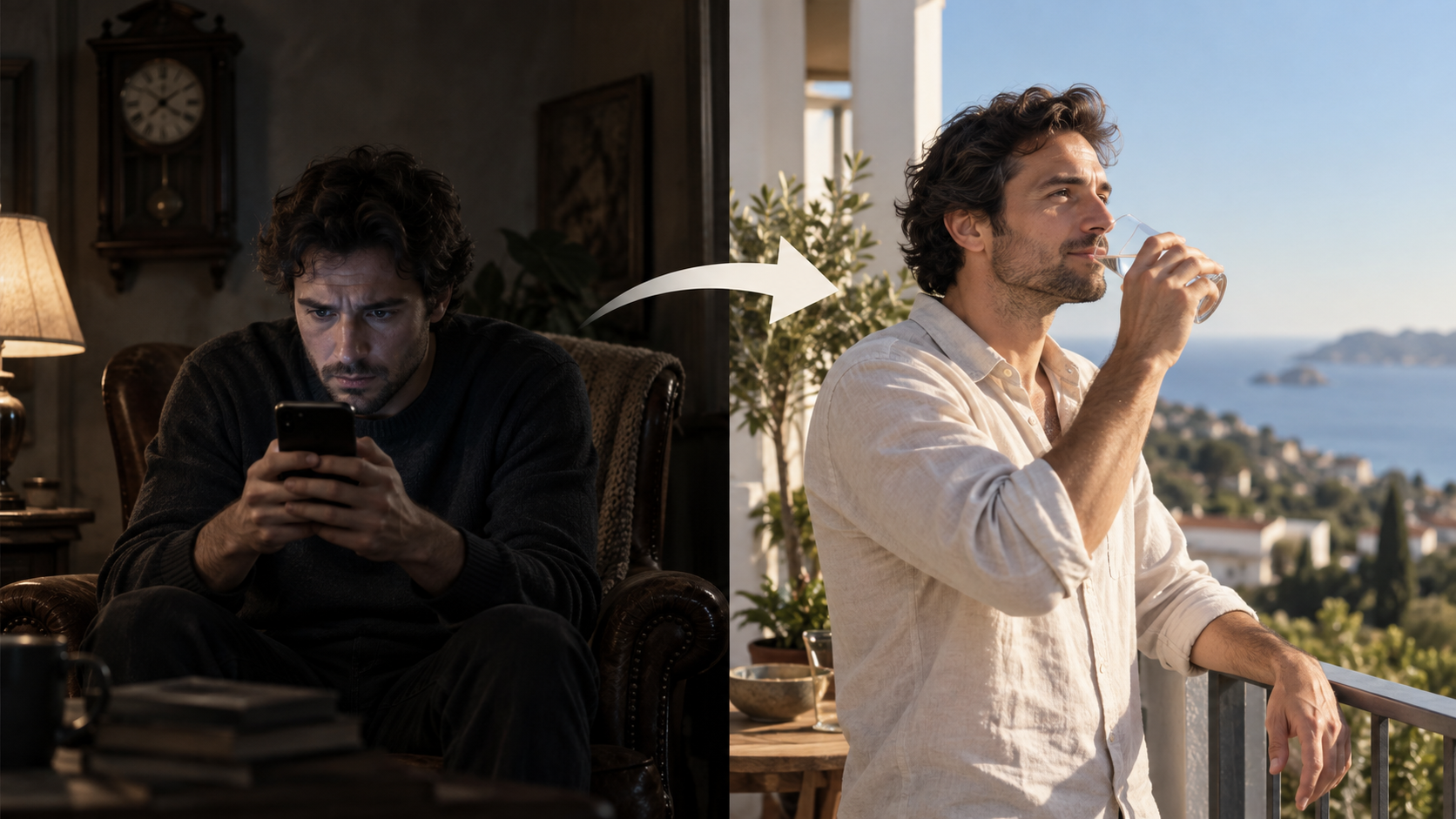
When a strong urge to smoke appears, all three adaptive processes continue at the same time, although they may not be equally noticeable in that particular episode. Adaptive Physiology may be more noticeable when nicotine withdrawal is involved; Adaptive Metabolism continues as part of the body's overall readjustment; and Adaptive Behaviour becomes especially visible each time you get through without smoking a situation that used to be associated with a cigarette.
Not every urge feels the same or lasts the same amount of time. Some pass within a few minutes, while others linger longer. Their intensity can vary, but a strong urge does not stay at its highest level indefinitely.
This applies whether you're still cutting down before your quit date or you've already gone a good while without smoking and a particular situation catches you off guard.
The four questions below give you something concrete to do in the exact moment the urge shows up.
What should I do when a strong urge to smoke suddenly hits?
The first thing is not to treat the feeling as an order you have to obey: wanting a cigarette doesn't mean you have to have one. Change one thing about what you're doing: stand up, take a short walk, step outside or start another activity, then give it a few minutes.
A strong urge can feel as though it needs an immediate response because, over the years, your brain learned a very quick sequence: a certain feeling or situation appeared, and a cigarette followed. Breaking that sequence introduces a different response.
You're not deciding how you'll live without cigarettes forever: you're just dealing with this moment.
How long does a strong urge to smoke last?
A strong urge to smoke usually lasts only a few minutes, although it may come back later. Its intensity can rise and fall, and it usually begins to ease within a few minutes, even without a cigarette.
Every time you experience that without lighting up, you learn something important: the urge can pass without you smoking.
Rather than asking "when will this go away for good?", try asking: "what can I do for the next few minutes while the intensity comes down?"
without you smoking. STOPCIGARROS.COM DR. HUMBERTO PALLARES
How can I calm anxiety without going back to smoking?
You don't need the anxiety to disappear completely. You only need to bring the intensity down enough to think and choose more calmly. Breathing slowly, walking, having a glass of water, changing activity or stepping away for a few minutes can help you through the moment.
Trying to force a feeling away can leave you checking it constantly instead. The more you ask "is it still there?", the more attention you give it. Sometimes a short breather somewhere else is enough to change the moment.
Aim to bring it down a notch, not to zero. If you were at an eight and bring it down to a five, you've already created more room to choose.
What should I do if the urge to smoke comes back several times in one day?
You don't have to deal with every urge the day might bring all at once. Deal with the one that's here now. Each episode has its own beginning and its own end.
It's easy to project what you're feeling now across the rest of the day: "if I feel like this now, I'll feel like this all day." That anticipation can add anxiety to an urge that was smaller to begin with.
Thinking "this is going to carry on all day" can wear you out more than the urge itself. Take it one urge at a time: each episode starts and finishes, so deal with the one happening now. This same approach of pausing before acting is what I explain in think before lighting up.
Deal with the one that's here now. STOPCIGARROS.COM DR. HUMBERTO PALLARES
Concept behind this page
Adaptive Physiology · Adaptive Metabolism · Adaptive Behaviour: three processes that occur simultaneously and can't be fully separated from one another, even though, depending on the moment, one may stand out more than the others. Adaptive Physiology covers the body's adjustments to the gradual change in, and eventual end of, its usual exposure to tobacco smoke and nicotine. Adaptive Metabolism goes along with those changes as the body looks for a new balance. Adaptive Behaviour shows up whenever someone gets through, without smoking, situations that were tied to cigarettes for years. On this page, Adaptive Behaviour is especially visible: every urge you get through without smoking is a concrete expression of that process.
STOPCIGARROS.COM DR. HUMBERTO PALLARESRead the guide in 10 languages



 STOPCIGARROS.COM DR. HUMBERTO PALLARES