Is it anxiety or a craving to smoke?
How to tell what you're feeling when cutting down or quitting smoking, without needing a perfect label.
Continue to: Page 4
You won't always be able to separate one thing from the other.
And you don't need to in order to know what to do with what you're feeling right now.
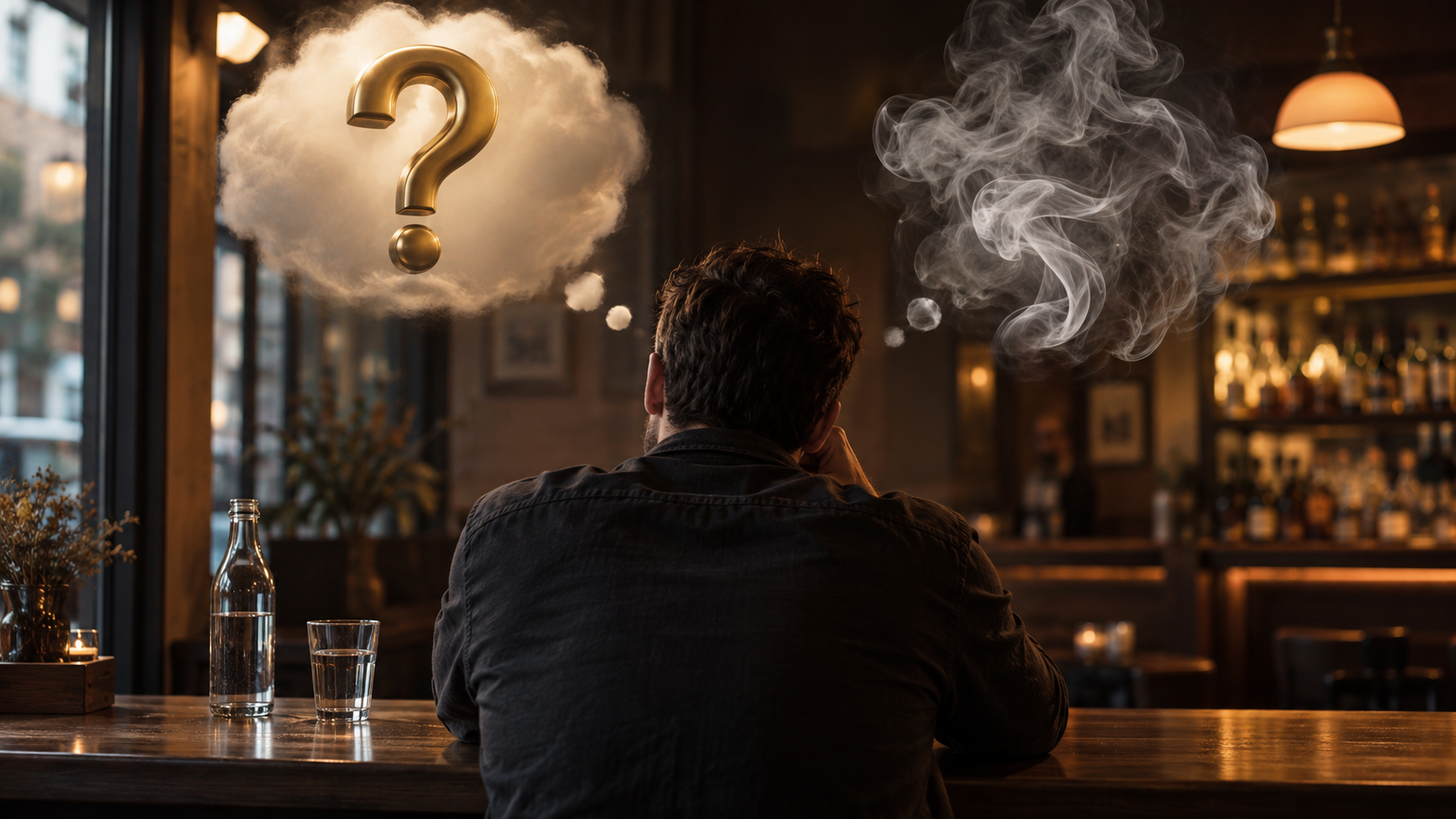
between anxiety, craving, and learned associations. STOPCIGARROS.COM DR. HUMBERTO PALLARES
Quitting smoking doesn't make other causes of anxiety in your life disappear. The three processes covered so far, Adaptive Physiology, Adaptive Metabolism and Adaptive Behaviour, can contribute to part of what you feel, but they don't explain everything on their own.
You don't need to give every sensation an exact label in order to respond well. Sometimes what matters more than naming the feeling is noticing what was happening just before it appeared.
This applies both while you're cutting down before your quit date and after you've been smoke-free for a while, when a familiar situation catches you off guard.
The following questions can help you understand what's happening in each moment without forcing a perfect label onto it.
How can I tell if what I'm feeling is anxiety or a craving to smoke?
You can't always separate the two with precision, and you don't need to. Before reaching for a label, look at what was happening just before the feeling appeared.
Your brain combines bodily sensations, emotions, memories and cues from your surroundings. That's why the same internal sensation can feel different depending on where you are and what you were doing.
A simple check can help: if worry or tension was already present, anxiety may be playing a larger role; if the feeling appeared in a situation that had been linked to cigarettes for years, a learned association may be playing a larger role. Often, both are involved.
Is all anxiety after quitting smoking caused by nicotine withdrawal?
No. Nicotine withdrawal can cause or intensify anxiety, but that doesn't mean every anxious feeling after quitting is caused by withdrawal. Worries about work, money, relationships, family or other parts of life don't disappear when you stop smoking.
After quitting, it's natural to pay closer attention to changes in how you feel. That extra attention can make a sensation that once went almost unnoticed stand out much more and be blamed immediately on quitting smoking.
Before saying, "This is because I quit smoking," ask what other reasonable explanation might exist. Don't lump everything together: withdrawal is one possible explanation, but it isn't the only one.
ask what other reasonable explanation might exist. STOPCIGARROS.COM DR. HUMBERTO PALLARES
What changes might I notice when I cut down or quit smoking?
You may notice restlessness, physical changes, shifts in appetite or routines, and situations that trigger a craving to smoke. In this framework, those changes can involve Adaptive Physiology, Adaptive Metabolism and Adaptive Behaviour at the same time.
There isn't a clean line separating these three processes. A bodily sensation can affect your behaviour; a change in behaviour can affect what you eat, how much you move or how you rest; and all of that can influence how you feel.
Instead of asking only, "What symptom do I have?", try asking: "What changed in my body, in the way I eat, or in what I usually do in this situation?"
Can a familiar situation trigger a craving to smoke even if it isn't nicotine withdrawal?
Yes. People, places, emotions or activities linked to smoking for years can trigger a craving even when nicotine withdrawal isn't the main cause at that moment.
Learned associations can remain even after the physical need for nicotine has decreased: your brain recognises the situation and anticipates what used to happen next.
The cue can keep triggering a craving for a while even when the craving is weaker and no longer gets the same response. You don't necessarily need to avoid that situation forever. Going through it in a new way gives your brain new experiences in which the situation happens without a cigarette. That's exactly the work covered in rewriting habits and breaking associations.
even after that craving has become weaker. STOPCIGARROS.COM DR. HUMBERTO PALLARES
The concept behind this page
Adaptive Physiology · Adaptive Metabolism · Adaptive Behaviour: three processes that happen at the same time and can't be fully separated, although one may stand out more than the others at a particular moment. Adaptive Physiology covers the body's adjustments as its usual exposure to tobacco smoke and nicotine is reduced and eventually stops. Adaptive Metabolism accompanies these changes as the body moves towards a new balance. Adaptive Behaviour becomes visible whenever a person goes through, without smoking, situations that were linked to cigarettes for years. The useful goal isn't to force the three processes apart, but to notice which one seems most prominent in what you're feeling at that moment so you can choose what to do next.
STOPCIGARROS.COM DR. HUMBERTO PALLARESYou can read the guide in 10 languages



 STOPCIGARROS.COM DR. HUMBERTO PALLARES